 Posted by
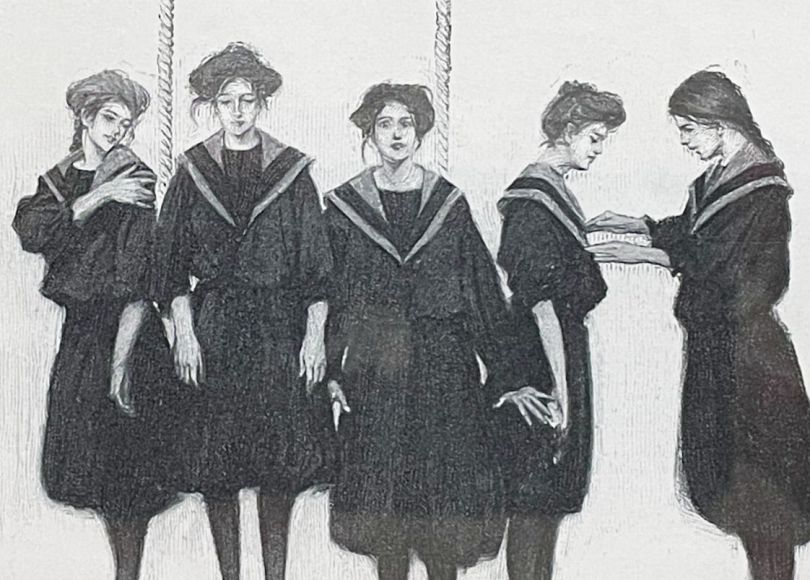
 Do you ever find something so quirky and delightful that you know you have to buy it? This was me the other day when I spotted this small halftone engraving at my neighborhood thrift store. The professionally framed picture was of 1800s/early1900s girls in their new gym frocks. Such odd subject matter. I couldn’t leave it behind though finding a buyer may take some time!
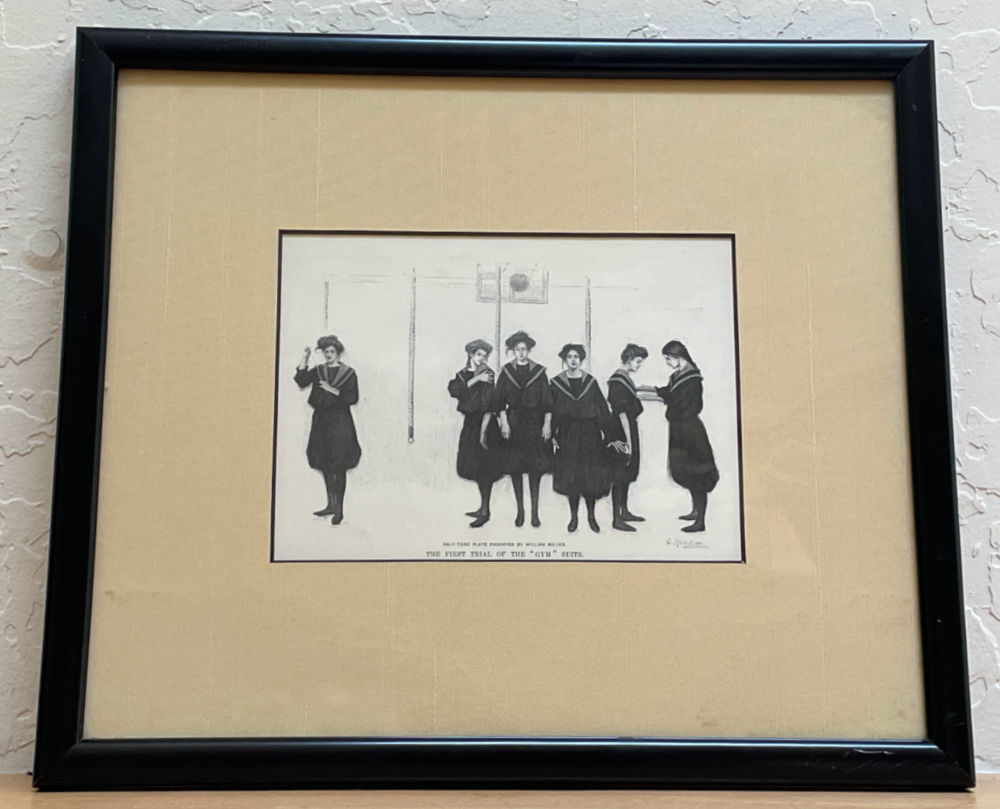
But the picture came with mysteries that lead me down some research rabbit holes!
My research process
- First I used Google Lens just to see if it would bring up anything helpful. Nope it only brought up photos of girls in antique gym clothes.
- Next, who was William Miller? I googled “engraver William Miller” and it brought up results for a Scottish engraver born in 1796 (died in 1882) best known for his landscapes and cityscapes. Hmmm.
- I started doing deeper dives into William Miller. I found a list of the artists he commonly worked with, but “C. Harding” (the signature on this piece) was not on the list. I found dozens of Miller engravings, but this one or anything similar never showed up.
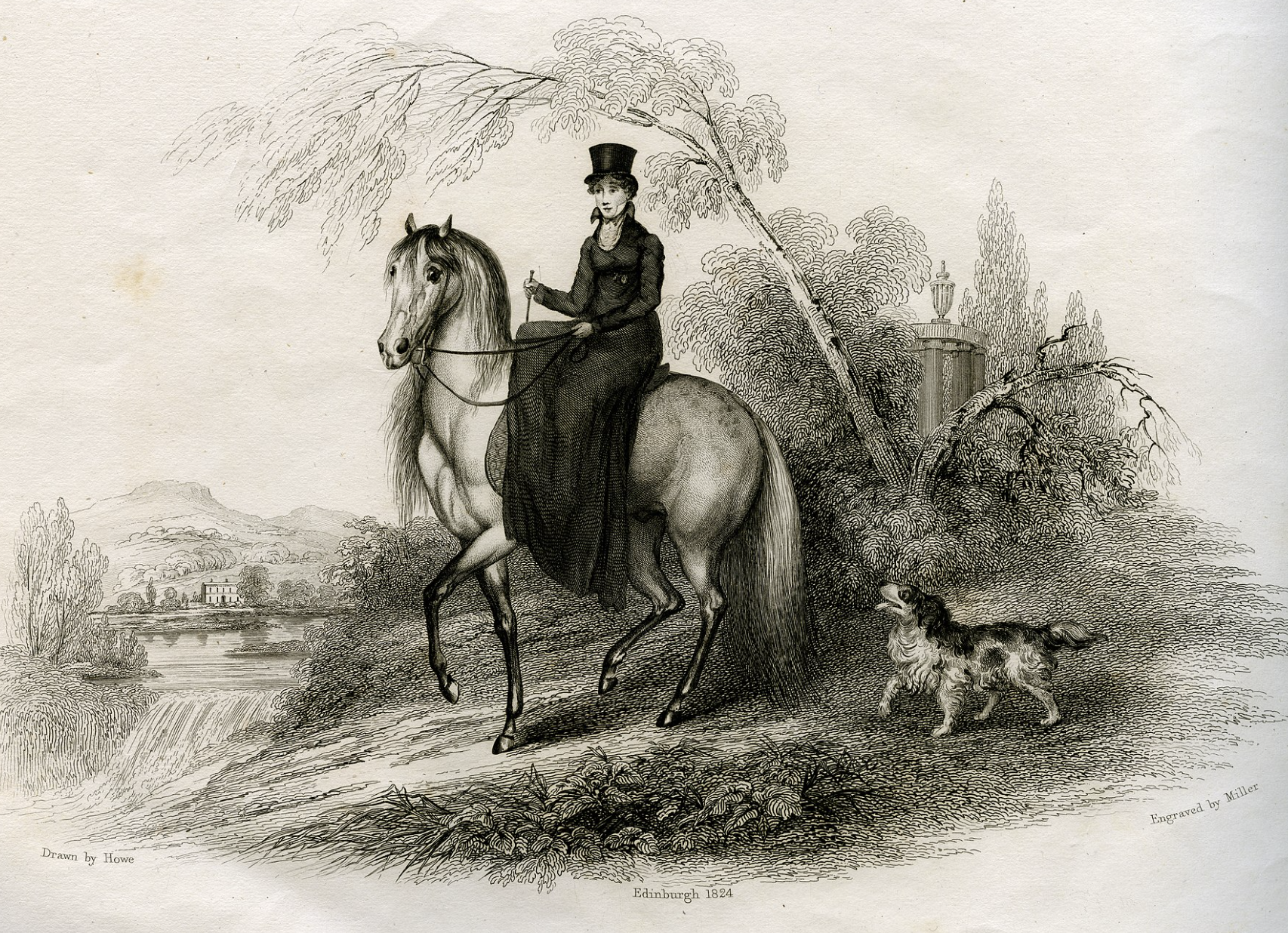
- Next I considered the fact that most original engravings have the names of the engraver and artist in small print on the right and left sides of the print, like this one by William Miller.
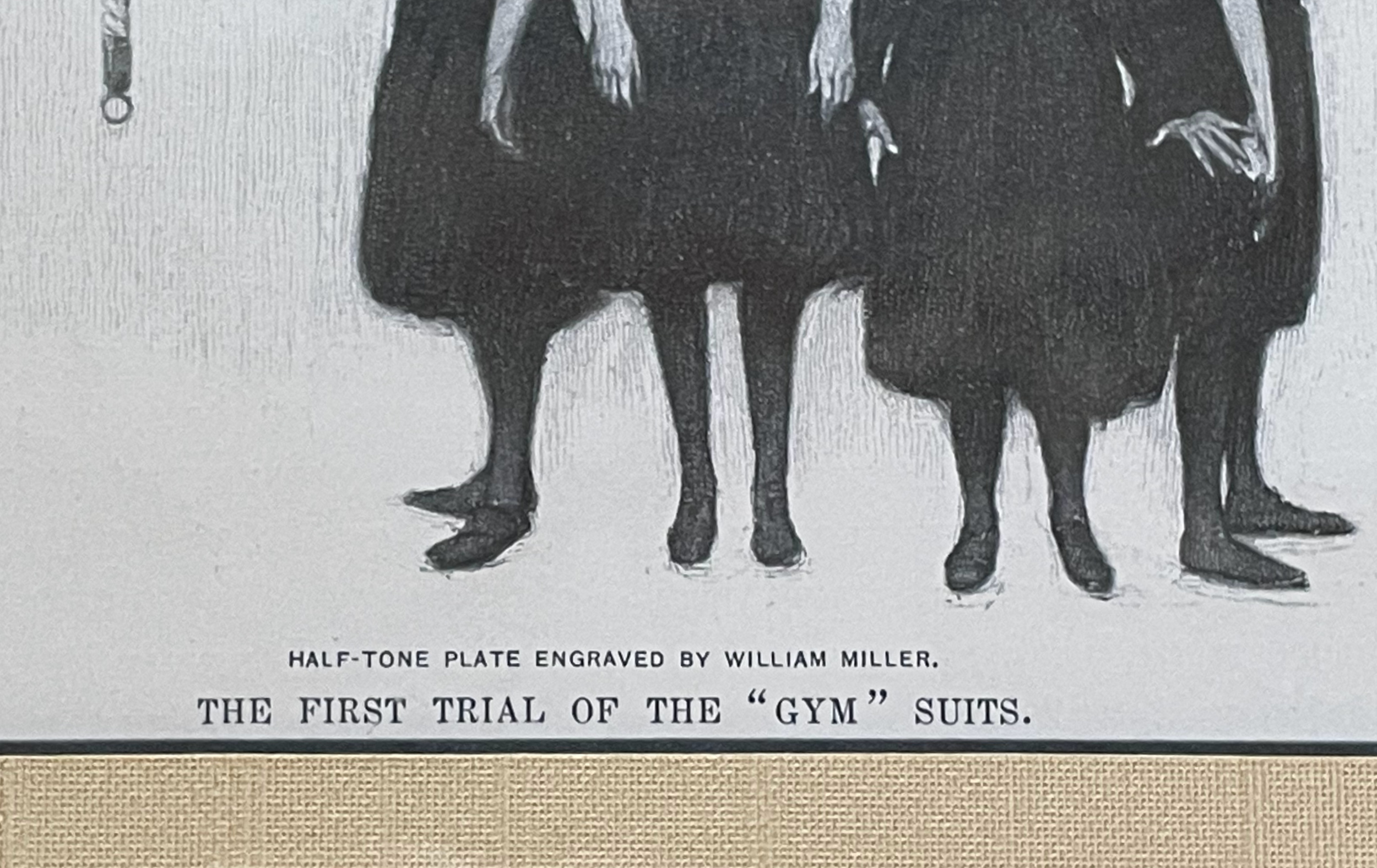
Mine has an atypical “Half-tone plate engraved by William Miller” printed above the title and the artist signature (C. Harding) in the picture itself.

- Next I googled the the artist “C. Harding.” There is an American painter Chester Harding of the same time frame (he died in 1866) but he painted mainly portraits and his painting signature is nothing like this. Additionally the advent of this type of gym wear was in the 1860s close to his death. It seems doubtful he was the artist. (Of course there are other artists named C. Harding, but those I have found so far are contemporary.)
- I also googled halftone printing since I know nothing about it. Turns out halftone printing is a “technique that simulates continuous tone imagery through the use of dots, varying either in size or spacing. This method was crucial for reproducing photographs and detailed illustrations in newspapers and books before the advent of digital printing.” The idea was first patented in 1852 and over the next few decades various inventors developed and improved the technique.
After trying various other searches on engravers named William Miller and artists named C. Harding I stopped for the day. I considered ripping off the back paper on the frame, removing the staples and taking out the print to get more clues as to age and provenance, but in this case I’ve decided against that–primarily because it is doubtful that this print has any great value. I’d like to keep it all intact.
So what do I really know about my print?
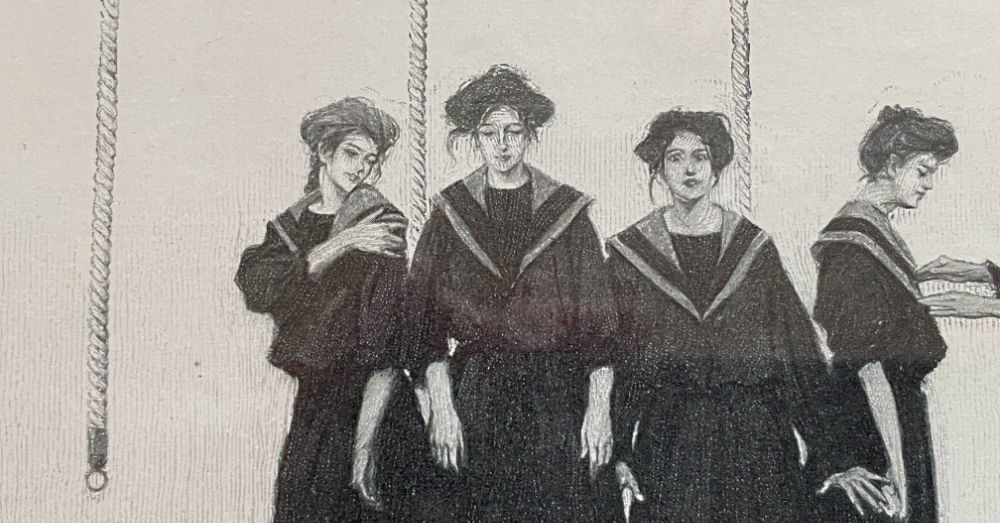
Honestly not a lot! Here’s what I can say:
- It is a finely rendered halftone print.
- I believe it has age, but I couldn’t swear it was from the 1800s.
- The engraver William Miller could be the Scotsman born in 1796, though it would be a very atypical subject matter for him.
- Artist “C. Harding” still remains a mystery.
- I am unsure if this is an original, a later restrike or something else altogether. For example, perhaps an illustration from a book or other publication.
- So far I haven’t found any others like so I feel safe in saying it is rare.
- The framing is newer, likely not older than 30 years.
I decided to list it even though I will continue my research. In the listing I am careful not to make any claims as to exact age or who William Miller and C. Harding are. Basically I am selling it as an older print in a newer frame.

For me the research is one of the fun parts of the vintage/antique biz, but sometimes doesn’t yield the results I’d hoped for! Still I will persevere.
Wishing you happy hunting,
Karen
 Hunting for Vintage
Hello Karen, I hope you are well. That’s an interesting research indeed! With pictures and art it is often the case that a neat result escapes us. Perhpas at some point you may find more, or just sell as it is – i agree with your course of action. I recently had an unsuccessful go at establishing the painter of two 19th C portraits, which came together and may at some point have been the work of the same artist, although mines would appear to be a later copy. I could find a trail for one of them, although I’m not convinced of what they state, but nothing for the other. I suspect the originals were by a minor central-european painter who may have influenced by folk art. I guess I will never find out 🙂 It was fun to research though! Take care and hopefully June will bring better business to your shop. Hugs
LikeLiked by 1 person
Hi Gabriella. I am well! I do love researching things, but you’re so right that sometimes “a neat result escapes us!” It sure did for me on this little print. Thank you for sharing about your painting research. Did you end up listing them? 😘
LikeLike