 Posted by
 One of the reasons I love the the vintage/antique business includes the infinite opportunity for learning. If I see something out in the wild that I think might be good (but I’m not 100% sure), if the price is right I’ll buy it as a reason to learn more.
That was me yesterday at our neighborhood thrift store. I picked up this small porcelain bowl. I knew it was hand-painted and I was pretty sure the style was Rose Medallion. But I had no idea of its age or even if it was worth picking up.
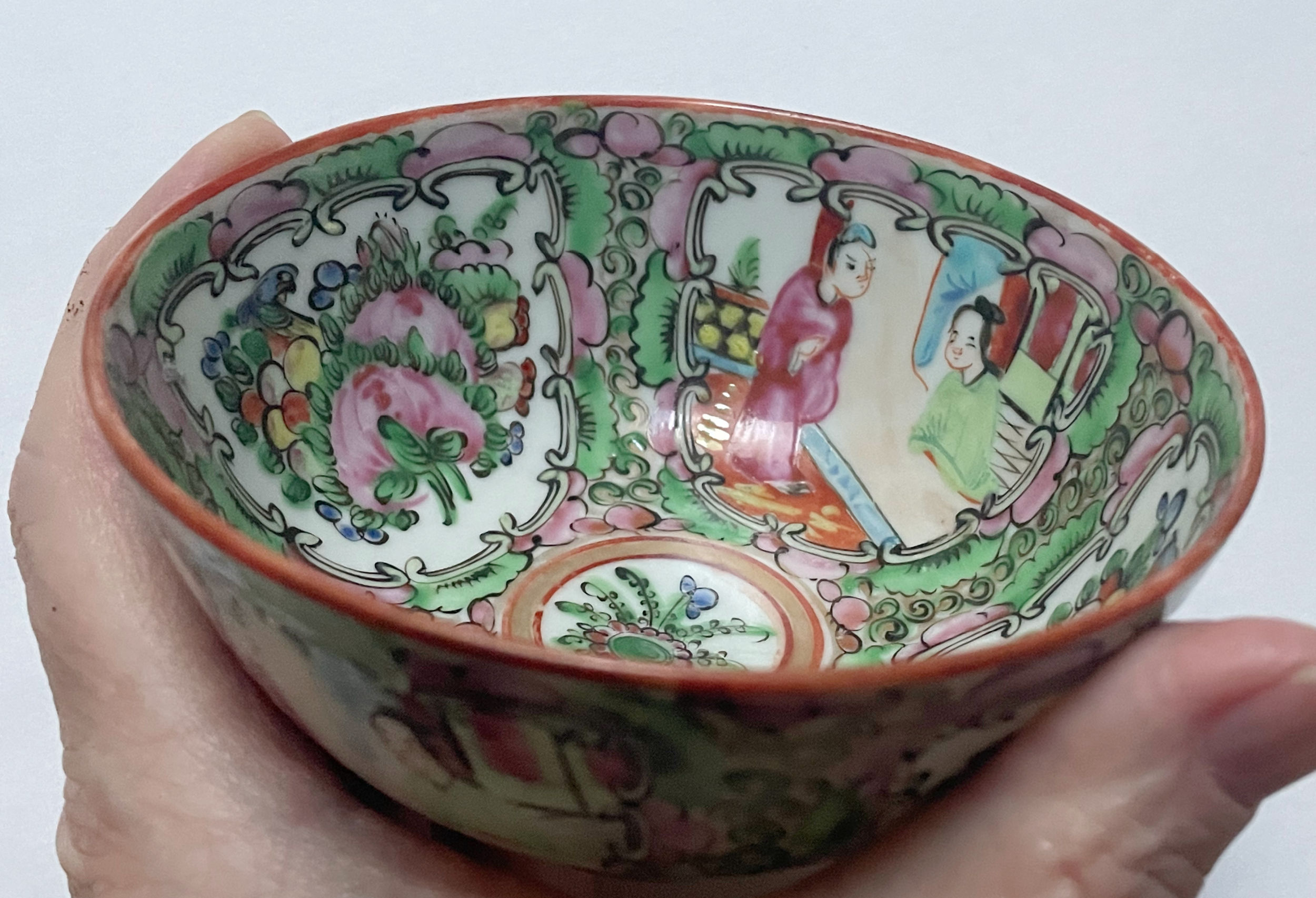
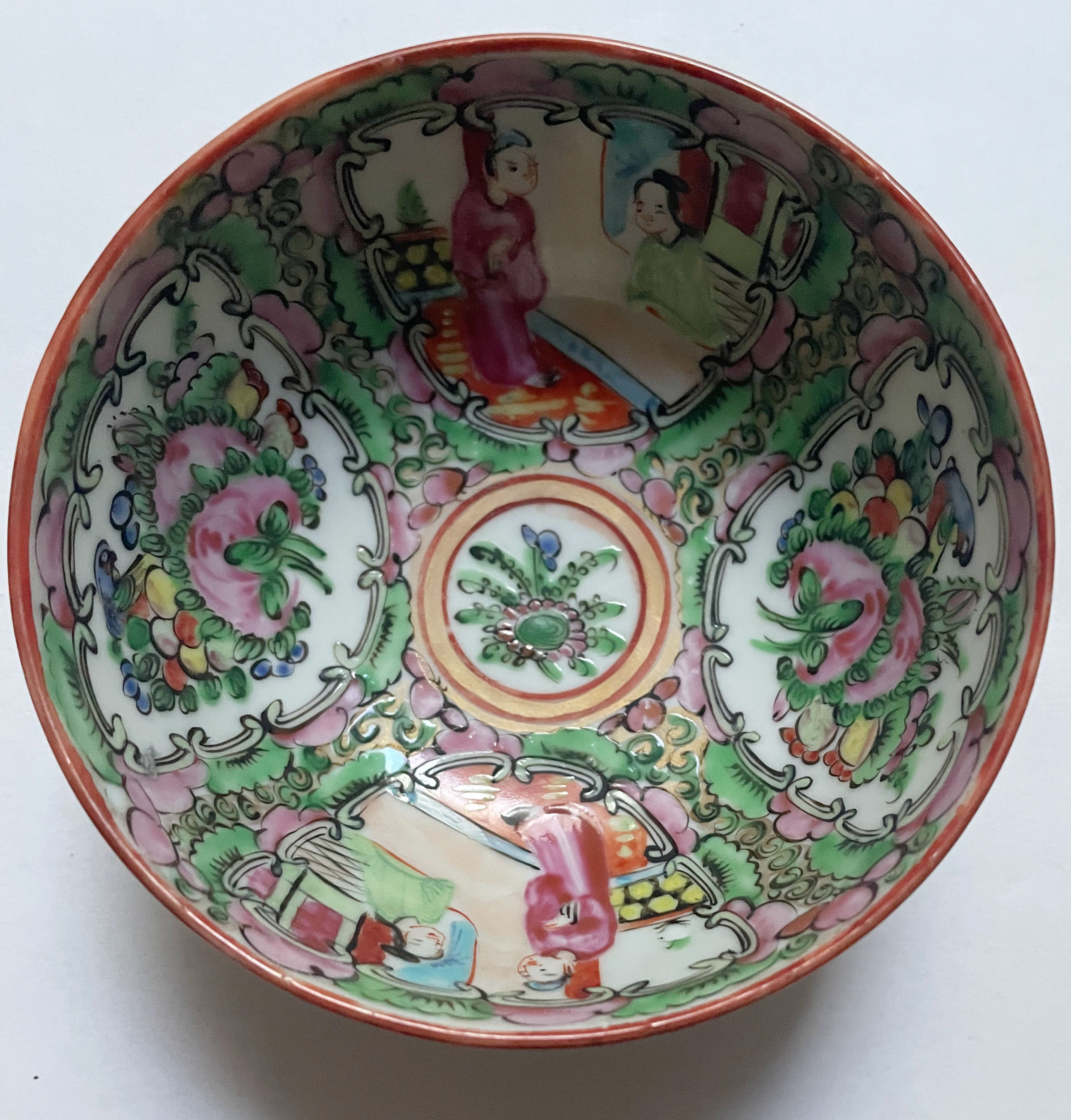
Still for a couple of bucks I decided it was worth a punt and back home I started researching it right away.
Rose Medallion Style
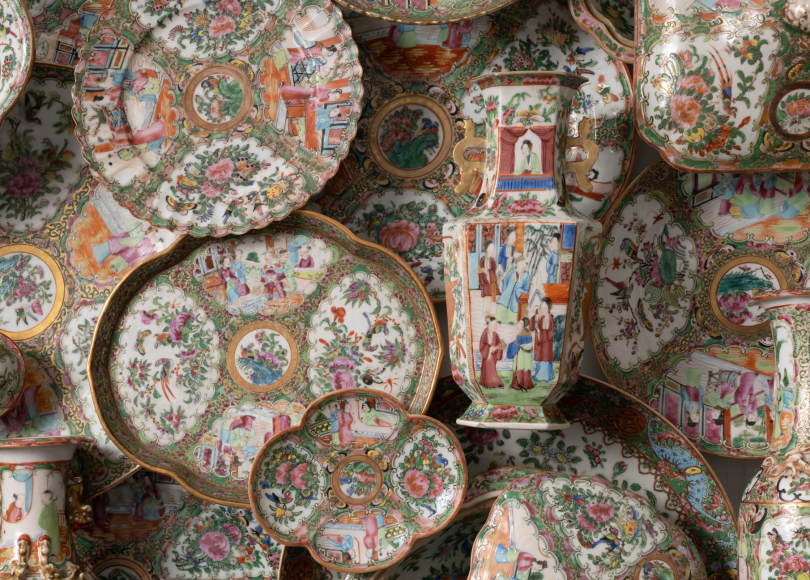
This style was developed in China circa 1820 (other sources say 1850) for the export market (Europe and the U.S.). Katherine of Pender & Peony writes, “As part of the Famille Rose style, it uses overglaze low-fired enamel paints in pink, green, blue, aubergine, and yellow. The pattern features a central medallion usually depicting a bird, tree peony, and/or rocks surrounded by four or more alternating panels showing people in one and then florals with fruits and birds in the next. The panels are called reserves and outlined by intricate borders of c-scrolls set agains green tendrils and pink florals. Bats, butterflies, and birds often decorate the outer edges of a form or fill in the spaces between the reserves.”
This 1860s platter circa is a lovely example of the workmanship and delicate painting of the earliest, more valuable, pieces.
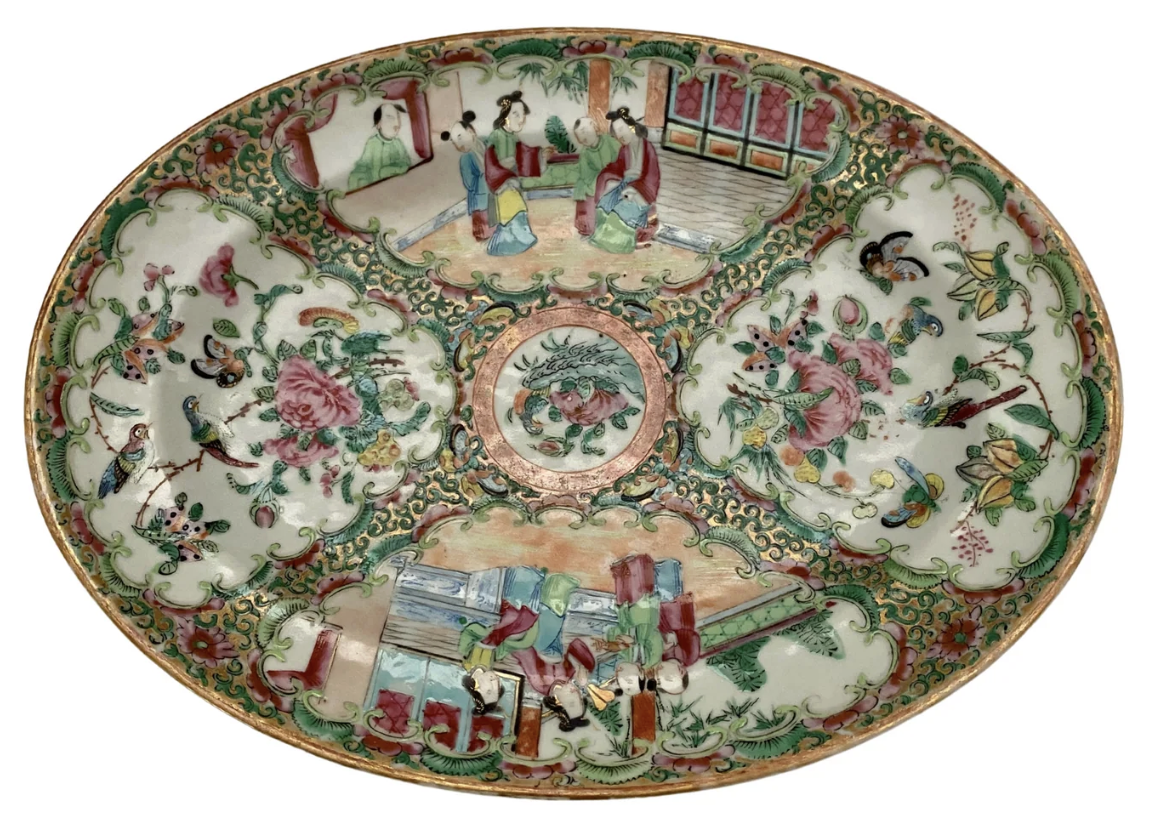
Finding pieces like the one above is rare.
Dating Rose Medallion China
As it turns out the earliest and most sought after rose medallion china had no markings on the bottom. By the late 1800s the U.S. required these pieces to be marked (thanks to the McKinley Tariff Act) and they were with “CHINA” in red. After 1919 that changed to “MADE IN CHINA” with later, more modern pieces taking on a variety of markings. (Unscrupulous dealers have been known to sand off the markings to fool buyers.)
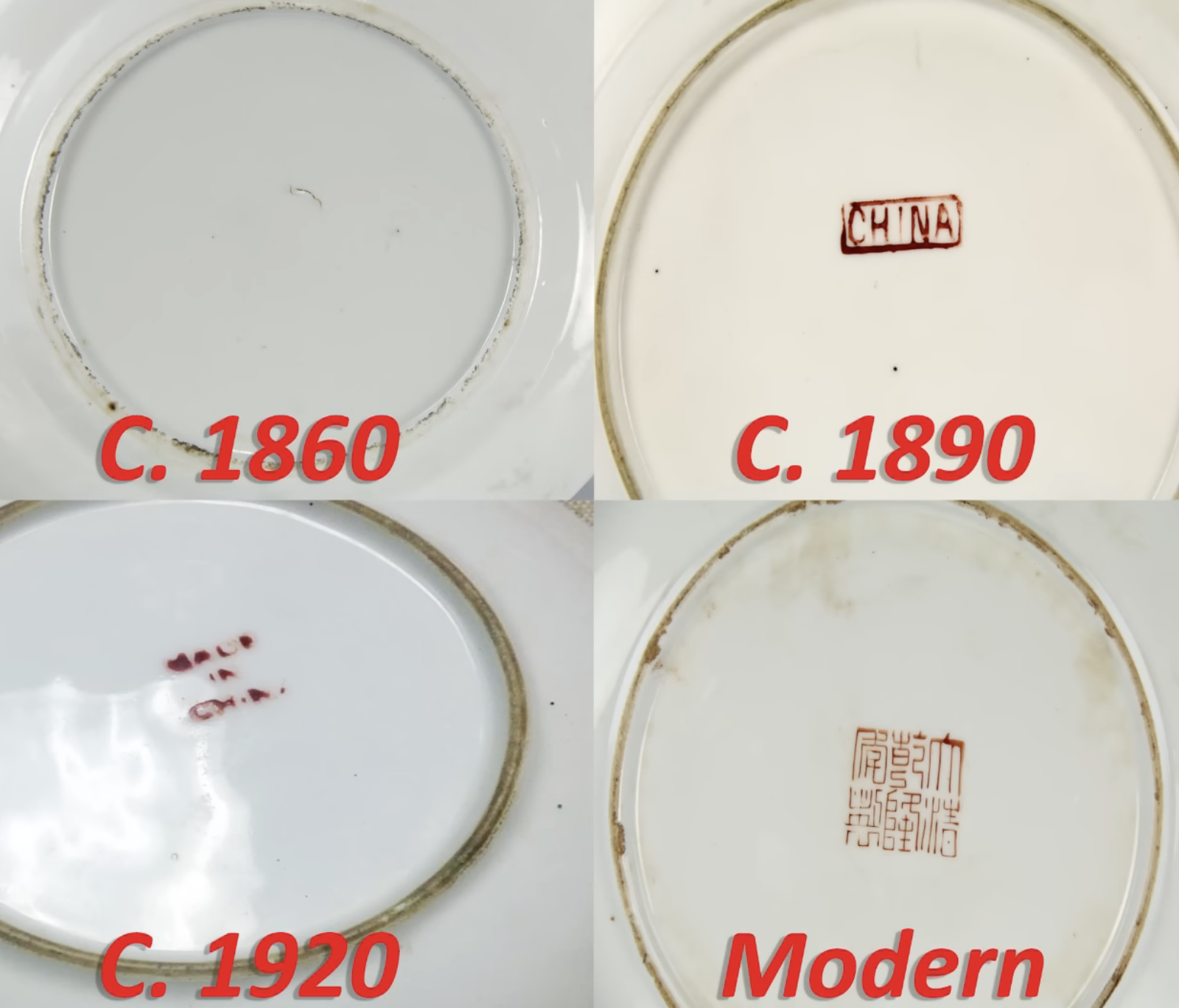
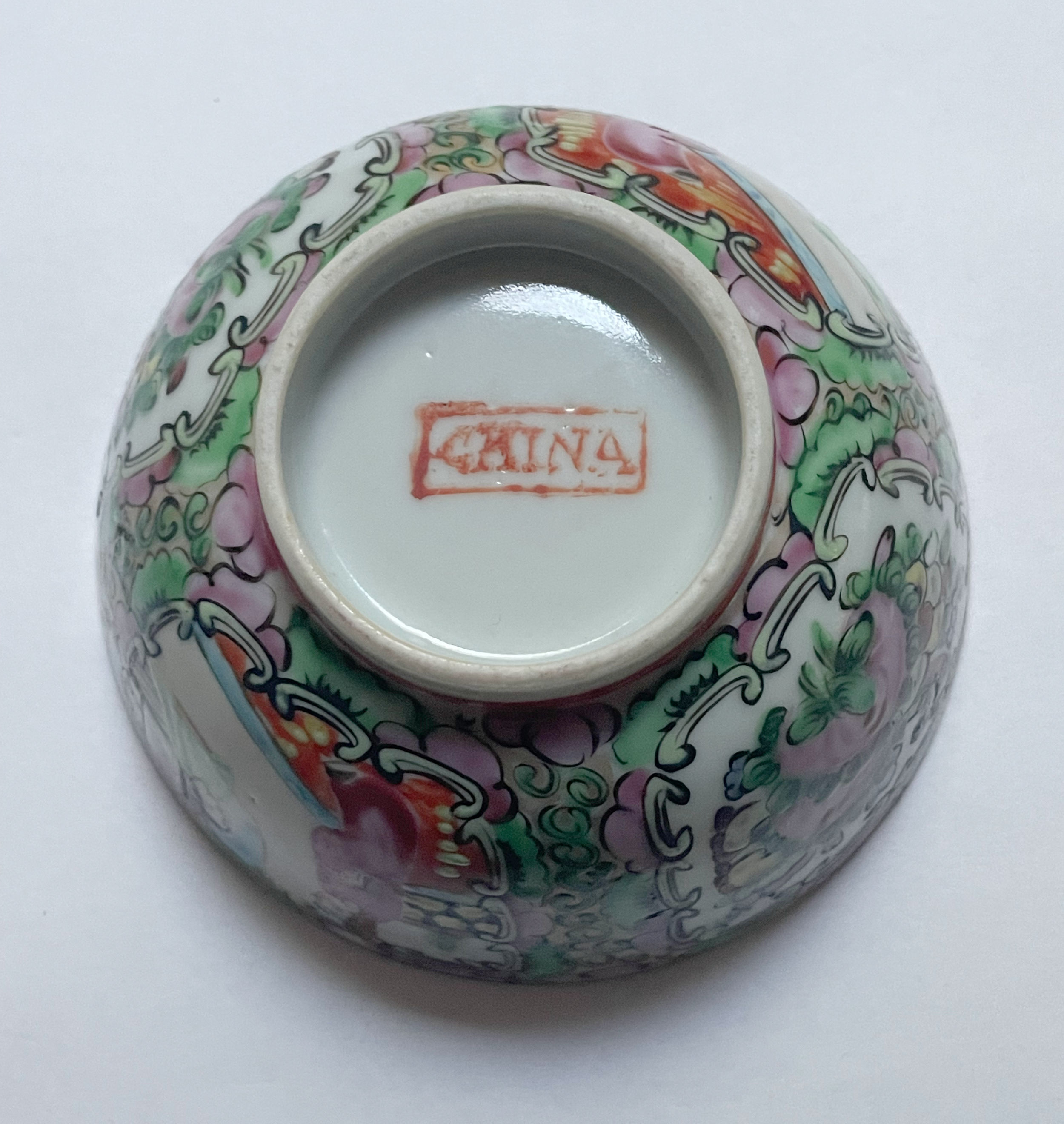
Mine has the marking for 1890 to 1919.
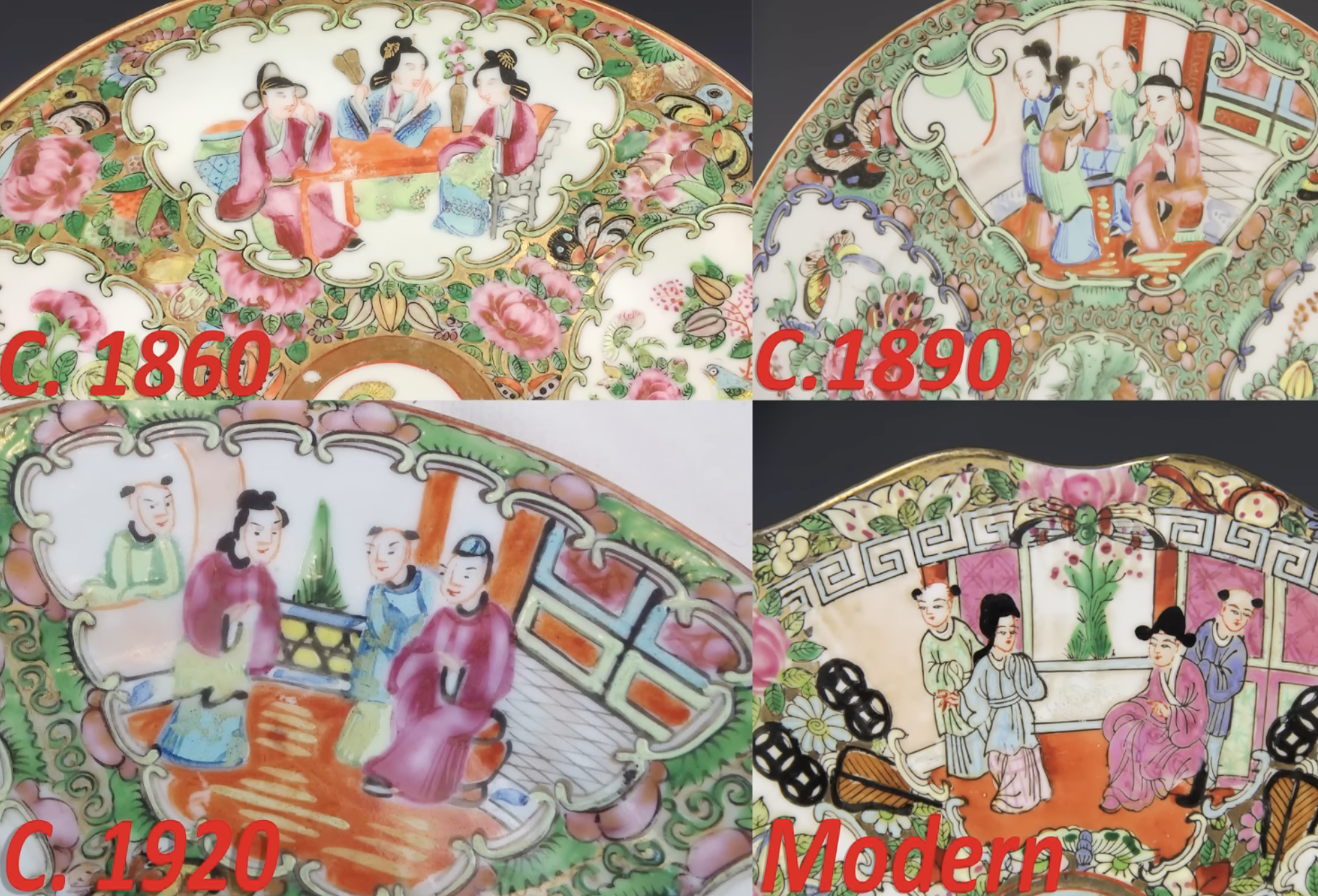
Another indicator–the earliest pieces were more detailed and intricate with the painting on modern pieces notably cruder. Additionally “antique pieces often have a smoother, thinner porcelain finish compared to later, heavier reproductions.”
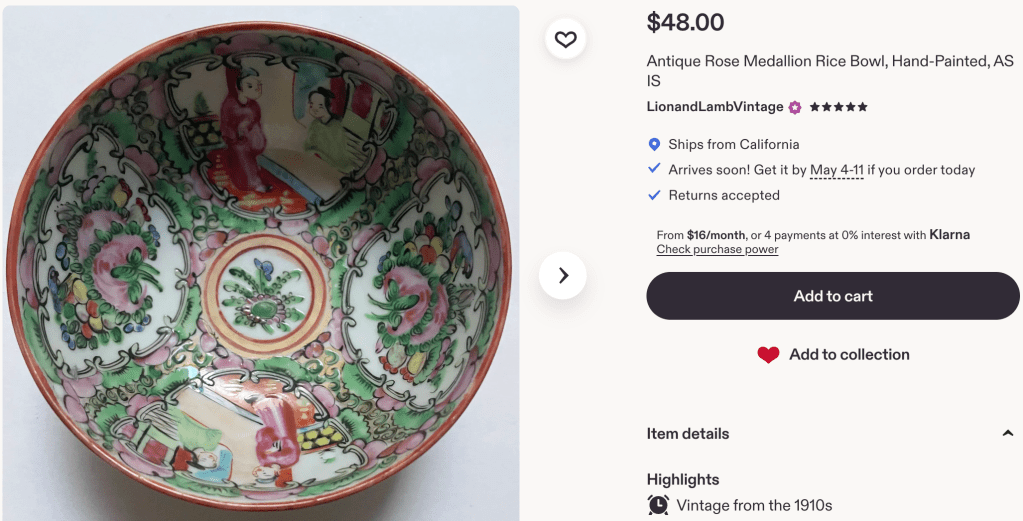
While I’ve only been researching a few hours I feel confident enough to list my bowl while I continue my research. I would like to do a much deeper dive and think I may go old school and check out a library book on this topic.
Would love to hear what you’ve been researching!


Informative article! Thank you.
LikeLiked by 1 person
I also found an inexpensive Rose Medallion plate because it felt right, and went down this rabbit hole. I find I research best when I’m motivated by something in hand. I remember someone once saying that the cost of buying an item to learn can be considered tuition, it’s usually cheaper than university!
LikeLiked by 1 person
Liz you are so right. Having something in hand does get you excited about doing the research!!
LikeLiked by 1 person