
 Posted by
 Most of us in the online vintage reselling biz are self taught. We learn on the job what to buy, how to package items and best practices for dealing with customers. We rely on hours of research to accurately describe and price our items. And if we are passionate about what we’re doing, we are learning, growing and improving our biz all the time.
Here are some of my recent lessons…
Lesson 1: Don’t hesitate reaching out to those with more expertise.
I’d been struggling to identify this long, beaded necklace. I knew the beads were likely antique glass trade beads and had found several possibilities of its origin, but I wanted to know more definitively what I had. So after researching them on and off for months (!) I finally contacted an online bead research site (Society of Bead Researchers) for help. And by golly, they got back to me within hours and told me what I had–translucent white and red-on-green (green heart) glass trade beads, circa 1800s, likely West Coast. Now I was able to list these with more confidence.

I’ve reached out to experts in the past and never received a reply so it was a lovely surprise to hear back. Of course one can pay for a professional evaluation, but most of my items aren’t valuable enough for that.
[Some folks have reached out to me for advice/evaluations through this blog and I have responded on most of the time, but sometimes the requests are rather cryptic, along the lines of…”I’ve just inherited my mother’s owl collection and I don’t know what to do with it.” And I want to say “Me neither!!!” ]
Lesson 2: If something seems too pricey, it probably is!
This is a lesson I “relearn” several times a year! I was out sourcing at my neighborhood thrift store the other day I saw this bundle of old knives. I rarely deal in flatware though I know some sellers swear by it. This was just a group of knives but I was enchanted by this old-world pattern by Community. I tried nailing down the pattern in the store to get more information and comps and failed. They seemed pricey to me, still in the end I bought them.
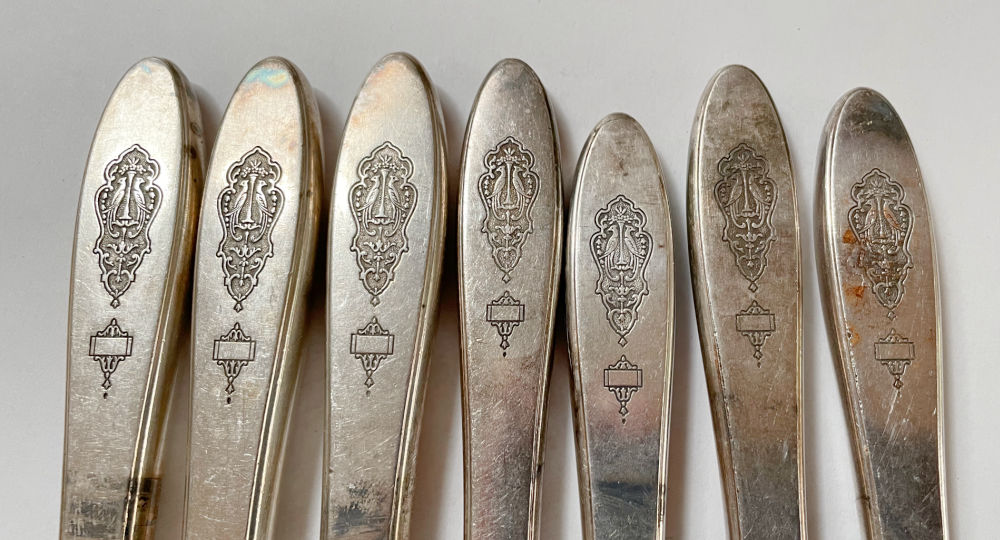
Well back at home I found that it’s the Bird of Paradise pattern, circa 1920s, and Community is for Oneida Community. So lovely and old, but, yup, I paid too much. On the plus side I love their age and quality and I won’t lose money, I just won’t make much. Sigh!
But here’s the other really weird thing I learned…the Oneida Community silverware company started as a religious community that practiced group or complex marriage where every man was the husband of every woman, and every woman the wife of every man! What could go wrong with that!!!
The Oneida Community was a perfectionist religious communal society founded by John Humphrey Noyes and his followers in 1848 near Oneida, New York. The community believed that Jesus had already returned in AD 70, making it possible for them to bring about Jesus’s millennial kingdom themselves, and be perfect and free of sin in this world, not just in Heaven…the Oneida Community practiced communalism (in the sense of communal property and possessions), group marriage, male sexual continence, Oneida stirpiculture (a form of eugenics), and mutual criticism. The Oneida Community dissolved in 1881, converting itself to a joint-stock company. This eventually became the silverware company Oneida Limited, one of the largest in the world. – Wikipedia
Lesson 3: Don’t be afraid to “separate” things.
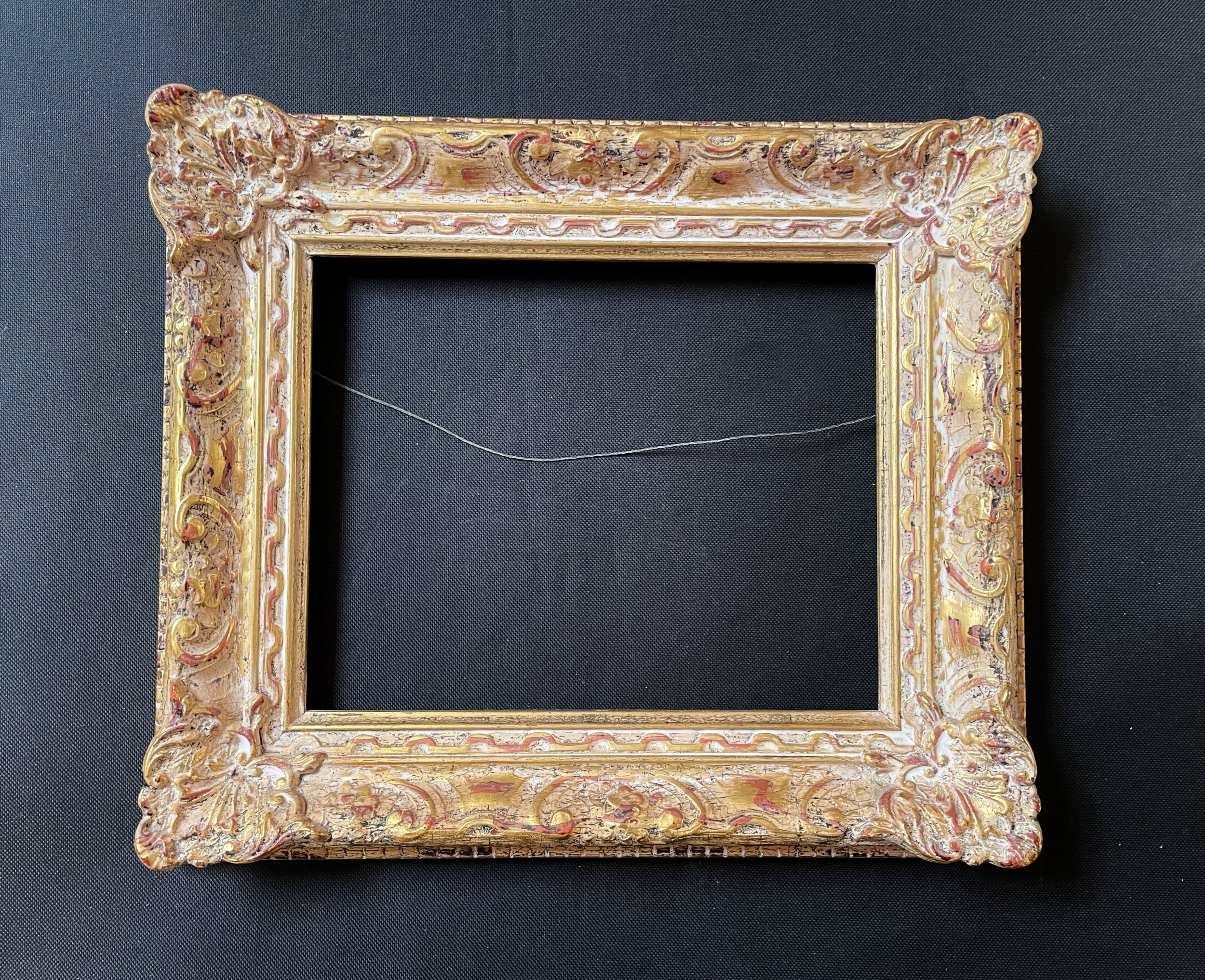
I bought this vintage Bandes oil painting but it was the gorgeous vintage frame I really liked. Well, the painting sat in my store for months with no interest so I separated the two and the frame sold almost immediately. The painting is currently in a cart.

Here’s another example–years ago when I was downsizing some of my vintage and antique purses I listed an exotic embroidered one with a sterling silver frame. And it sat there for years. Literally years. No one wanted it. So I removed the fabric from the frame and the frame sold in a few months for the same price as I was listing the whole purse. Well, it was the frame that had the value but no one noticed the frame because of the purse.


Lesson 4: Don’t be afraid to group “related” things.
On the flip side, some items just aren’t worth enough on their own to sell online so I’m starting to create little groups. I put these two Holocaust books together for $18 plus shipping and they are now on their way to a new home. Okay, still not a lot of money, but they were easy to store and ship.

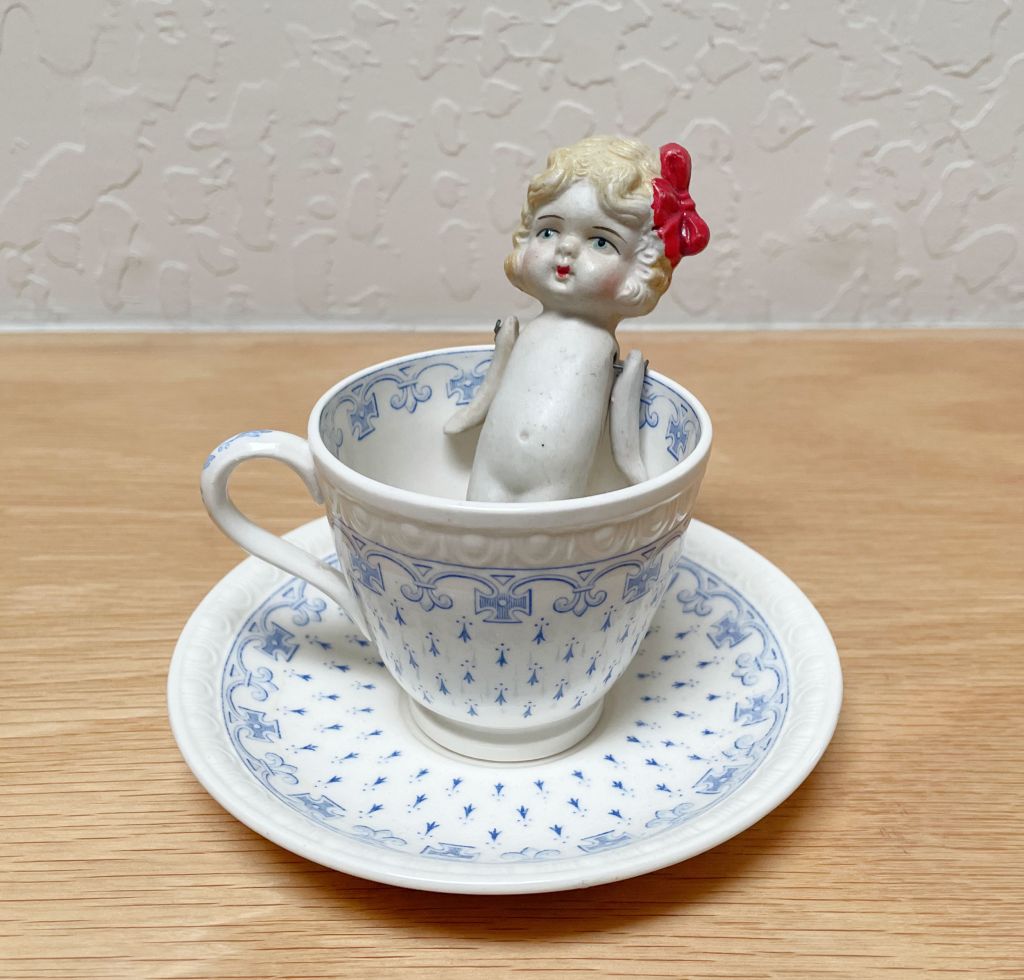
Here’s an unexpected grouping whose only relatedness is cuteness! I bought this lovely old Spode teacup, but found out after I got home that it was crazed inside reducing its salability. So I put this vintage frozen Charlotte doll figure in it and really liked the combo. I’ve now listed these together and someone put it in their cart. Of course that doesn’t mean they’ll follow through and buy it, but it does mean they like it enough to think about it!
So here I am still trundling along in this biz after 12 years. It’s equal parts fun, hard work and frustrating, but I’m loving it!
Wishing you happy hunting,
Karen


I wonder if what you have there is a frozen Charlotte doll. I didn’t think those kinds of dolls had jointed limbs at all. You probably know better than I do though. What is your experience?
LikeLiked by 1 person
Thanks Fonda. When I did my initial research (some years ago now) I saw both kinds listed as frozen Charlottes (jointed and not), but I didn’t do a deep dive. Something to check into.
LikeLiked by 1 person
wow!! 58A Few Fun Days…and Finds!
LikeLike